
What Is Performance Marketing? A Comprehensive Guide
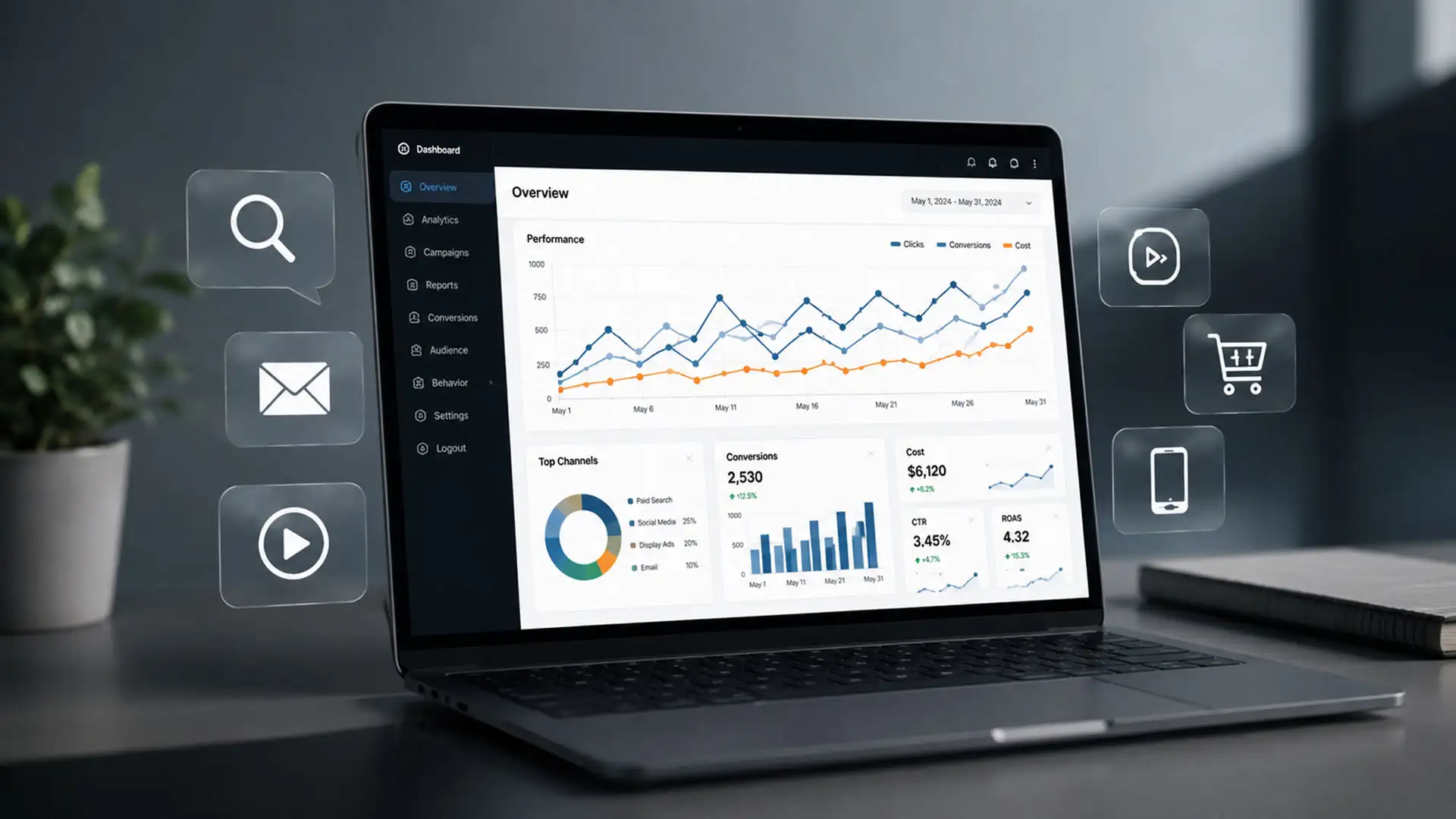
What's Inside Our Performance Marketing Guide?
Are Your Digital Ad Budgets Actually Delivering Results?
Many business owners and marketing managers share the same nagging worry: "Is my ad spend actually going to waste?" In traditional media buying, millions get poured into impressions or page views whose return can't be precisely measured, and in today's fiercely competitive landscape, brands can no longer afford that luxury.
This is exactly where a game-changing approach comes in. We call it performance marketing: a model where every cent of the ad budget is accountable, assumptions are eliminated, and the entire focus rests on measurable outcomes. According to global digital market data compiled by Oberlo, global digital ad spend is projected to surpass $854.9 billion in 2026, the clearest evidence yet that brands are no longer allocating budget just to "be visible," but directly to "generate conversions." This guide walks through, step by step, how to turn a digital ad budget from a line-item expense into an investment vehicle that produces sustainable profitability.
What Is Performance Marketing and How Does It Work?
At its core, performance marketing is a purely data- and Return on Investment (ROI)-driven digital marketing model where advertisers only pay when a specific action or outcome (click, sale, lead form submission) occurs.
The most significant difference from traditional marketing is the "pay-for-results" principle. When you place an ad in a magazine or rent a billboard, you can never exactly know how many people saw your ad or how many visited your store because of it. However, in performance marketing, the process is far more transparent and analytical.
The working principle generally consists of these four steps:
- Defining the Goal: The valuable action for the business (sale, lead, subscription) is defined.
- Campaign Creation: Audience segments, ad platforms, and creatives suited to the selected goal are prepared.
- Real-Time Measurement: The moment the campaign goes live, pixels and tracking codes record user behavior with millisecond precision.
- Payment Upon Result: The advertiser pays the platform only when the predefined action occurs (e.g., when a user clicks the ad or purchases the product).
Core Components: Channels, Metrics, and Models
For this ecosystem to function properly, channel selection, measurement metrics, and payment models need to work in sync. The payment model in particular determines how well the budget is protected. CPM (cost per thousand impressions) tends to serve brand-awareness goals, while performance-driven campaigns are built on outcome-based models such as CPC (cost per click) or CPA (cost per acquisition). A channel only counts as successful when the payment model matches the campaign's actual goal — otherwise, the budget ends up being judged against metrics that never told the right story to begin with.
Most Common Performance Marketing Channels
A strategy's success starts with picking the channels where the target audience actually spends time. The channels below reach users at different stages of intent:
- Google Ads (Search and Shopping): The channel with the highest purchase intent, since users are actively searching for a product or service.
- Social Media Advertising (Meta, LinkedIn, TikTok): Advanced demographic and behavioral targeting reaches audiences with high interest who haven't searched yet, through visual content.
- Affiliate Marketing: Publishers earn a commission only on completed sales, making this a comparatively low-risk growth model for the brand.
- Programmatic Advertising: Ad inventory is bought and sold in real time through algorithms, making this a large-scale, automation-driven system.
These four channels work best not as substitutes for each other but as complements, each covering a different stage of the conversion funnel.
Key Metrics (KPIs) Measuring Success
A campaign's performance doesn't turn into meaningful optimization unless it's tracked against the right metrics. The table below summarizes the core metrics used across performance marketing and what each one actually measures:
| Metric | Stands For | What It Measures |
|---|---|---|
| CPA | Cost Per Acquisition | The average amount spent to acquire one customer or lead. |
| CPC | Cost Per Click | The cost of each individual click on an ad. |
| CPL | Cost Per Lead | The cost of each user who submits a form or shares contact details. |
| ROAS | Return on Ad Spend | How much revenue is generated for every unit of budget spent. |
| Conversion Rate | — | The percentage of users who complete the intended action after seeing the ad. |
These metrics only tell the full story when read together — a low CPC paired with a high CPA, for instance, usually points to a problem somewhere in the post-click experience rather than in the ad itself.
How to Build an Effective Performance Marketing Strategy?
Achieving corporate growth targets depends not on coincidences, but on performance marketing strategies engineered with precision and a flawless execution process. Here are the 4 fundamental, proven strategic steps we apply at Poligon Interactive:
Step 1: Setting Clear and Measurable Goals
The only way to know if your campaigns are successful is to set SMART (Specific, Measurable, Achievable, Relevant, Time-bound) goals from the start. Merely saying "We want to increase our sales" is not a strategy. Instead, when you set a goal like "Increasing our website sales by 20% over the next 3 months while keeping our CPA costs around $10," both the agency and the brand know exactly what to focus on.
Step 2: Data-Driven Audience Analysis
Today, data-driven marketing goes far beyond knowing the age or city of your users. What times are your target audience online? Which devices do they use? What are their past purchasing habits? Which pages on your website did they visit before abandoning their carts? Custom Audience and Lookalike segments, built by processing this in-depth behavioral and intent-based data, ensure your ads reach the right people with pinpoint accuracy.
Step 3: Proper Channel and Budget Planning
Trying to be present on all platforms simultaneously with a limited digital advertising budget is one of the most common strategic mistakes. Your budget should be distributed according to your business's conversion funnel. If your goal is instant sales, the majority of the budget should be directed to Google Shopping and the Search Network; if your goal is to introduce a visual product to the masses and generate demand, emphasis should be placed on the Meta (Instagram/Facebook) ecosystem.
Step 4: Continuous Optimization and A/B Testing
Performance marketing is not a "set-and-forget" model where you build the campaign and lean back. Market competition, click costs, and user trends change every day. Continuous A/B testing on ad copy, visuals, landing pages, and bidding strategies is vital. Conversion rate optimization efforts conducted periodically by an expert agency are the key to achieving a much higher profit margin with the same advertising budget.
Frequently Asked Questions About Performance Marketing